Last Updated: February 2026 | Reading Time: ~18 minutes
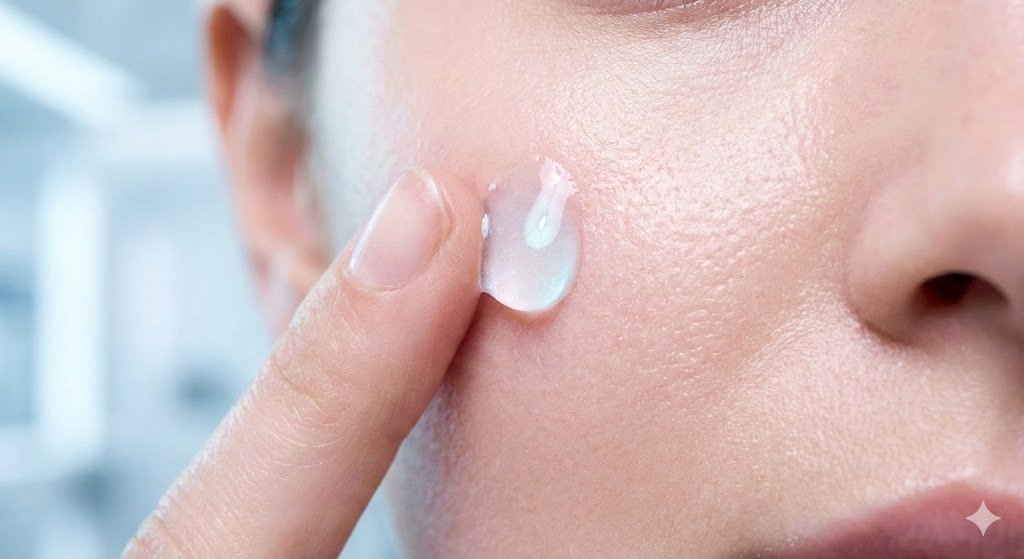
If you've seen "salmon DNA skincare science" trending on TikTok and thought it sounded more like a biology class than a beauty cabinet, you're not alone. But here's the thing, the science behind this ingredient is genuinely fascinating, and it runs deeper than any viral trend. PDRN (Polydeoxyribonucleotide) has a 40-year clinical history, peer-reviewed research behind it, and a mechanism of action that's unlike anything else on a skincare shelf.
This page is your complete, no-fluff breakdown of what PDRN actually is, how it works at the cellular level, what the clinical evidence really shows, and how to make sense of the growing landscape of products claiming to harness it.
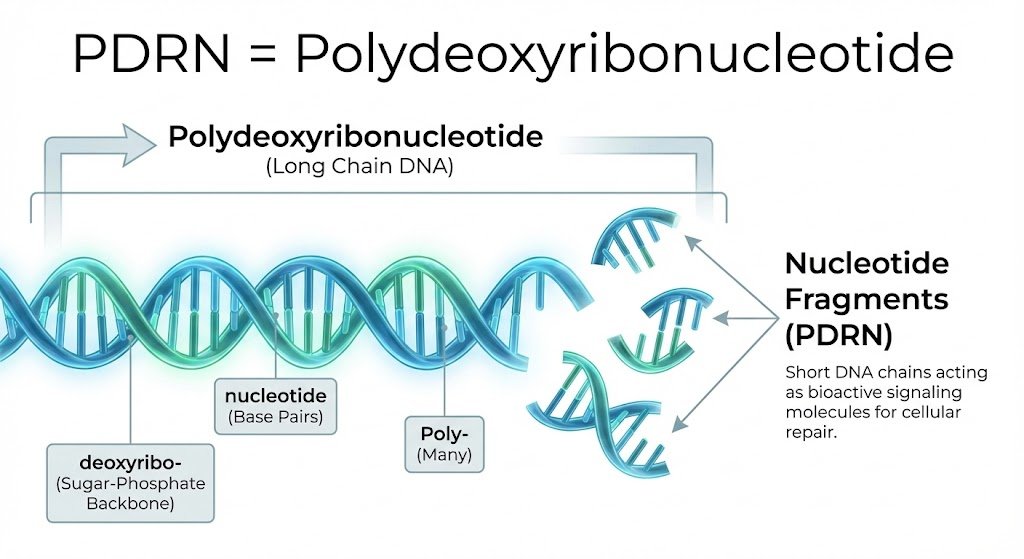
PDRN stands for Polydeoxyribonucleotide. At the most basic level, it's composed of short chains of deoxyribonucleotides (the building blocks that make up DNA). These fragments range in molecular weight from approximately 50 to 1,500 kDa, which places them in a biologically active sweet spot: small enough to interact with cellular receptors,while also substantial enough to support tissue repair processes.
You may also see it referred to as:
The important thing to understand is that PDRN is not the same as injecting someone's DNA into your skin, nor does it alter your own genetic code. The DNA fragments are heavily processed, purified, and broken down. They function as signaling molecules. They don't rewrite your biology; they communicate with your cells in a way that encourages regenerative activity.
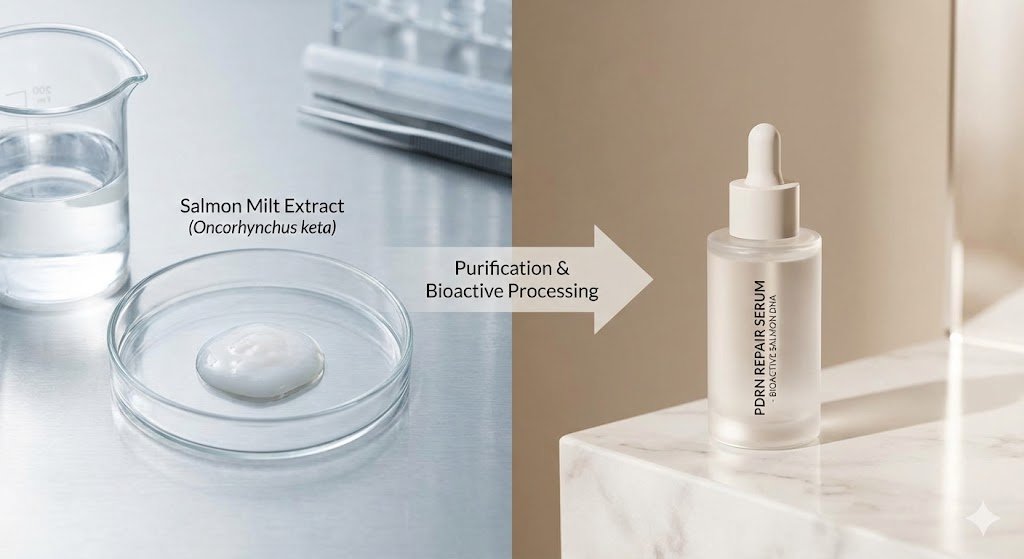
The use of salmon DNA isn't arbitrary. Salmon sperm (specifically the milt, the reproductive fluid of male salmon) contains a remarkably high concentration of DNA. More importantly, salmon DNA has a structural similarity to human DNA that makes it highly biocompatible. The body recognizes and responds to it without triggering an immune rejection response.
The two primary salmon species used are salmon trout (Oncorhynchus mykiss) and chum salmon (Oncorhynchus keta), both of which yield consistent DNA quality for pharmaceutical and cosmetic extraction.
Industrial PDRN production follows a highly controlled sequence:
Temperature sensitivity is a key manufacturing challenge: PDRN begins to degrade above 45°C, meaning that traditional heat-sterilization processes used in skincare manufacturing can destroy its efficacy. Reputable manufacturers use cold-chain production protocols and aseptic fill technology to preserve the ingredient's activity.
This is where things get genuinely interesting and where PDRN separates itself from the majority of trendy skincare ingredients.
Most topical actives work on the surface or just below it. Antioxidants neutralize free radicals on the skin's surface. Exfoliants remove dead cells from the stratum corneum. Even hyaluronic acid, for all its benefits, primarily attracts water to the upper layers of skin.
PDRN, particularly in its injectable form, operates at a deeper cellular level, interacting with specific receptors on skin cells to initiate a biological repair cascade. Understanding this mechanism is what separates genuine PDRN science from the marketing language you'll find on most product pages.
PDRN exerts its effects through two primary biological mechanisms:
1. Adenosine A2A Receptor Activation
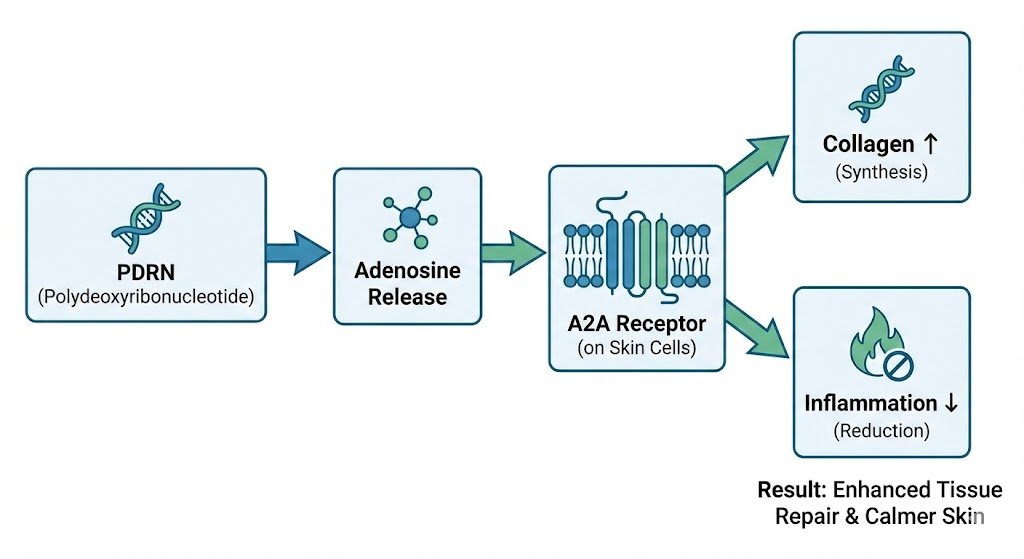
This is PDRN's primary and most well-documented pathway. When PDRN is metabolized by the body, it breaks down into adenosine and free nucleotides. Adenosine binds to A2A receptors, a subtype of purinergic receptors found on fibroblasts (the cells that produce collagen and elastin) and other skin cells.
When the A2A receptor is activated, it triggers a downstream signaling cascade that:
The practical result: the skin's structural scaffolding is rebuilt from within while the inflammatory environment that breaks it down is simultaneously calmed.
2. The Salvage Pathway
The second mechanism involves PDRN's nucleotide fragments being taken up by cells and used in the nucleotide salvage pathway, essentially a cellular recycling system. Rather than synthesizing new DNA building blocks from scratch (an energy-intensive process), cells can use the pre-assembled nucleotides from PDRN as raw material. This reduces cellular energy expenditure and accelerates processes like cell division and tissue repair, particularly in damaged or stressed skin cells.
Collagen is the primary structural protein of the dermis, accounting for approximately 70–80% of the skin's dry weight. From our mid-20s onward, collagen production declines at roughly 1% per year, and is further degraded by UV exposure, pollution, and chronic inflammation.
PDRN stimulates collagen production through multiple routes:
The result is both more collagen being produced AND less existing collagen being destroyed. This dual action compounds over time.
One of PDRN's more underappreciated effects is its ability to stimulate angiogenesis, which is the formation of new blood vessels. It does this by upregulating VEGF (Vascular Endothelial Growth Factor), a protein that signals the body to grow new capillaries.
In PDRN-treated tissue, VEGF expression has been shown to increase by 60–120% compared to controls. New capillaries mean better oxygen delivery, improved nutrient supply, and more efficient removal of metabolic waste. This translates to healthier, more luminous-looking skin. This VEGF pathway also explains PDRN's effectiveness in treating dark circles and sallowness, both of which are related to poor microcirculation.
Chronic, low-grade inflammation is now recognized as one of the primary drivers of both intrinsic skin aging and conditions like rosacea, post-acne hyperpigmentation, and barrier dysfunction.
PDRN modulates the inflammatory environment by:
This makes PDRN particularly well-suited for sensitive or reactive skin, post-procedure recovery, and conditions involving chronic inflammation.
The purine and pyrimidine bases that make up PDRN's nucleotide structure exhibit direct free radical scavenging activity. Reactive oxygen species (ROS), generated by UV exposure, pollution, and normal metabolic processes, are a leading cause of collagen degradation and skin aging. PDRN provides a degree of direct antioxidant protection while also reducing the oxidative damage caused by inflammation.
A 2025 study published in PLOS One demonstrated that PDRN treatment in a UVB-damaged skin model reduced oxidative damage by increasing expression of SIRT1, referred to as a "longevity gene", and suppressing cellular senescence markers p53 and p16.
More recent research has explored PDRN's potential in reducing hyperpigmentation. PDRN has been shown to inhibit MITF (Microphthalmia-associated Transcription Factor), a key regulator of melanin production. This suggests a brightening effect that goes beyond surface-level exfoliation — it addresses pigmentation at the regulatory level.
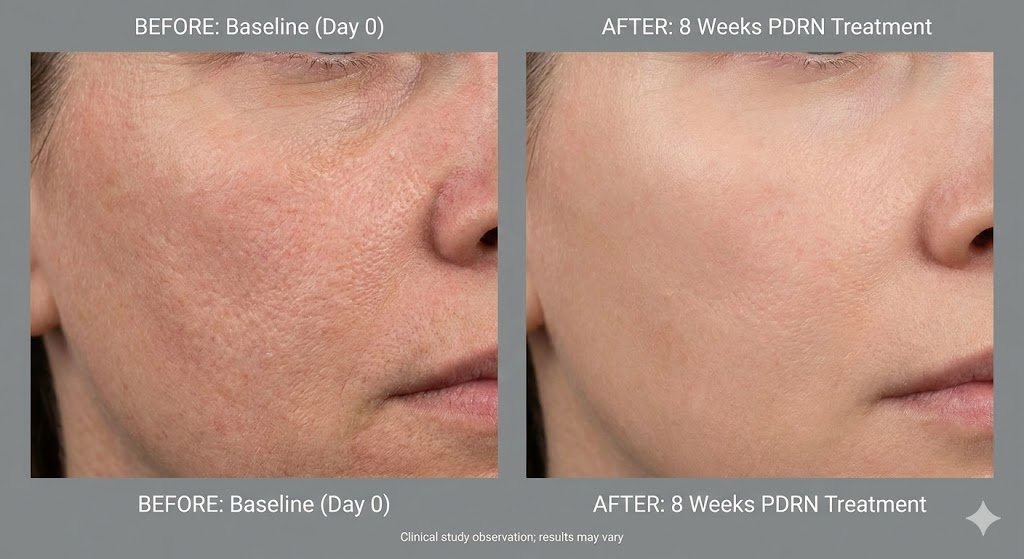
PDRN has a longer clinical track record than most people realize. It has been used in medical settings for over 40 years, initially developed in Italy in the 1980s for wound healing and the treatment of radiation-induced skin damage.
Here's an honest summary of where the evidence stands:
The honest reality is that robust clinical evidence for topical PDRN is still catching up to its injectable counterpart. Most large-scale, peer-reviewed studies on PDRN's regenerative effects were conducted with intradermal injections. Translating those results to topical application involves the additional variable of skin penetration and high-molecular-weight PDRN molecules face real barriers crossing the intact stratum corneum.
That said, notable topical findings include:
The bottom line on evidence: If you're looking for the most clinically validated form of PDRN treatment, injectables administered by a trained aesthetic practitioner represent the gold standard. Topical products offer a meaningful but milder version of the same biological activity — best understood as supporting skin health and providing measurable hydration, soothing, and barrier benefits, with anti-aging effects that accumulate over consistent, long-term use.
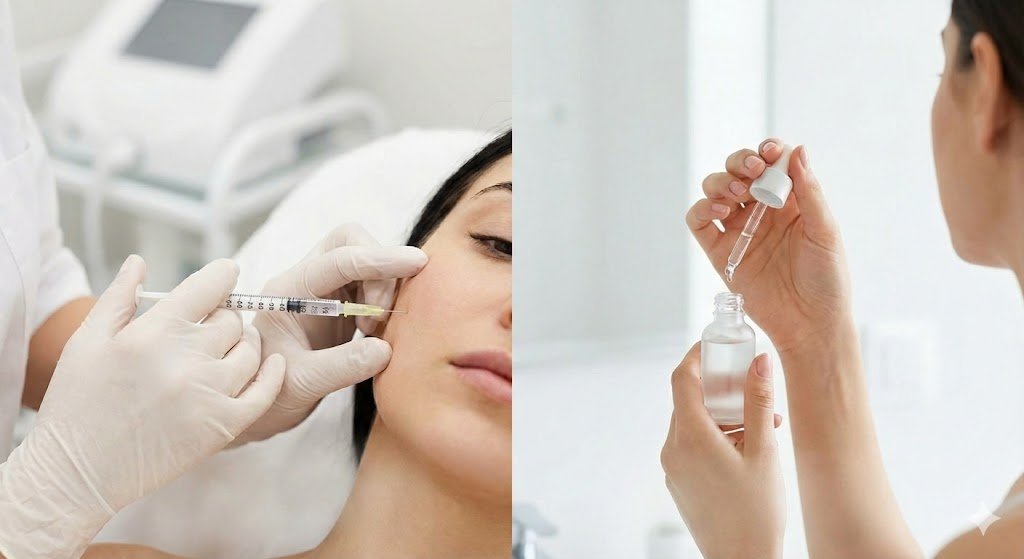
This is arguably the most important thing to understand when evaluating PDRN products.
Injectable PDRN (the most well-known brand being Rejuran Healer, developed in South Korea) delivers PDRN directly into the dermis via microinjections — bypassing the skin barrier entirely. This means:
Topical products are legal as cosmetics worldwide and are the form most consumers will encounter. The key challenge is transdermal absorption. PDRN molecules are relatively large, and the skin's outer barrier (the stratum corneum) is designed to keep large molecules out.
Manufacturers address this through:
When topical PDRN is applied immediately after microneedling, the microchannels created by the needles allow significantly deeper penetration into the dermis. This approach is growing in professional aesthetic settings and represents perhaps the most efficacious use of topical PDRN outside of injections.
Deep Hydration
PDRN supports the skin's natural production of hyaluronic acid and helps maintain the moisture-binding capacity of the extracellular matrix. Most users notice improved hydration within two to four weeks of consistent topical use.
Soothing & Anti-Inflammatory
This is arguably the most consistently observed topical benefit. PDRN's ability to calm inflammation makes it excellent for post-procedure recovery, reactive skin, rosacea-prone skin, and anyone whose skin tends toward redness and sensitivity.
Barrier Support
By supporting cellular repair and reducing chronic inflammation, PDRN helps reinforce a compromised skin barrier. This is relevant for anyone dealing with eczema, over-exfoliation, or environmental damage.
Wound Healing Acceleration
Well-documented in clinical settings. Relevant for acne healing, post-extraction recovery, and post-laser treatment.
Collagen Stimulation (Topical)
The mechanism is biologically sound, but the question is all about penetration depth. With formulation advances and delivery technologies improving, topical collagen stimulation becomes more plausible. More significant improvements in firmness and elasticity typically appear after six to eight weeks of consistent use.
Hyperpigmentation & Brightening
The MITF-inhibition pathway is scientifically interesting. Multiple K-beauty PDRN products market a brightening effect and user reports are positive, though large-scale topical trials specifically for hyperpigmentation are limited.
Anti-Aging & Wrinkle Reduction
Supported by injectable evidence and increasingly by topical studies, but requires consistent long-term use and realistic expectations for topical formats.
Hair Regrowth
Emerging area of research. PDRN's VEGF-upregulating and follicular stimulating effects are generating interest for scalp applications.

PDRN is notably versatile. Its combination of regenerative, anti-inflammatory, and hydrating effects means it's useful across a wide range of skin concerns.
Ideal candidates include:
PDRN is generally considered safe for all skin types, including the most sensitive. The DNA is highly purified and processed to remove proteins that could trigger reactions. Most formulations are dermatologist-tested and hypoallergenic.
Note for those with fish allergies: Standard salmon-derived PDRN is purified to remove proteins, but if you have a severe fish allergy, consult your dermatologist before use, or look for plant-derived PDRN alternatives (covered below).
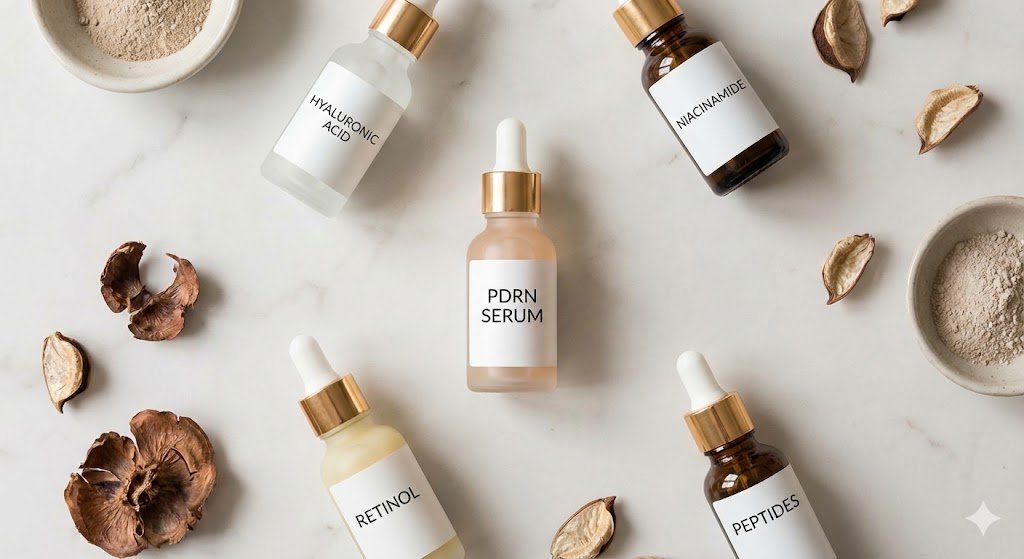
Retinol is the gold standard for topical collagen stimulation and has decades of large-scale clinical evidence behind it. PDRN doesn't match retinol's evidence base for anti-aging in topical form, but it offers something retinol can't: it doesn't irritate. The two are highly complementary; many protocols combine them, using PDRN to soothe and support the barrier while retinol does the heavy lifting on cell turnover.
Both are hydrating, but they work differently. Hyaluronic acid is a humectant, meaning it attracts and binds water. PDRN stimulates the skin's own HA production through cellular signaling. PDRN's hydrating effect is therefore more endogenous (coming from within) and may be more durable over time. Many of the best PDRN formulations include both.
Niacinamide is an excellent anti-inflammatory and barrier-supporting ingredient with strong evidence for brightening. PDRN and niacinamide work on complementary pathways and are frequently formulated together. Niacinamide also acts as a penetration enhancer for PDRN.
Peptides are synthetic signal molecules that tell skin cells to produce more collagen and elastin. PDRN works through a different receptor pathway (A2A) and adds the additional dimension of nucleotide supply and anti-inflammatory modulation. They're synergistic rather than redundant, hence the popularity of "PDRN + Peptide" formulations in K-beauty.
Both operate via cellular signaling, but growth factors target specific surface receptors (EGF, FGF, etc.) for cell proliferation, while PDRN's A2A pathway is more broadly regenerative and anti-inflammatory. PDRN tends to be better tolerated by sensitive skin than many growth factor products.
As the PDRN trend has grown, so has demand for vegan and animal-free alternatives. Several brands now offer "plant-based PDRN" or "vegan PDRN", primarily derived from ginseng root, microalgae (chlorella/spirulina), or produced via microbial fermentation.
Ginseng-derived PDRN has the most validating data of the plant-based alternatives. Research has confirmed that ginseng polynucleotides can interact with the same A2A receptors as salmon PDRN, though internal studies from manufacturers suggest plant-derived options achieve roughly 75–85% of salmon PDRN's receptor activation at equivalent concentrations. Ginseng PDRN also carries the additional benefit of ginsenosides, compounds with their own anti-inflammatory and antioxidant properties.
Microalgae-derived PDRN (from chlorella or spirulina) avoids animal sourcing entirely and introduces complementary antioxidants (chlorophyll, phycocyanin), though the evidence base is less developed.
The honest assessment: Salmon-derived PDRN has the highest evidence base and the most clinical validation. If you have no ethical objection to it, the science currently favors it. However, ginseng-derived PDRN is a credible alternative with a growing evidence base. This is particularly relevant for vegan consumers or those with fish allergies.
Yes. PDRN has an excellent safety profile across decades of clinical use. Key points include:
United States: Topical PDRN products are legal and marketed as cosmetics, provided they make no drug claims.
South Korea: Injectable PDRN (Rejuran and similar products) are mainstream, widely used aesthetic treatment fully integrated into dermatological practice.
Europe & Italy: PDRN has been used in regulated medical and aesthetic contexts for decades. Italy, in particular, has been a center of PDRN research since its 1980s origins.
Not all PDRN products are equal. Concentration, molecular weight, and purification quality vary significantly between brands. Look for products that disclose PDRN concentration (typically measured in ppm or as a percentage) and are manufactured under pharmaceutical or cosmetic GMP (Good Manufacturing Practice) standards.
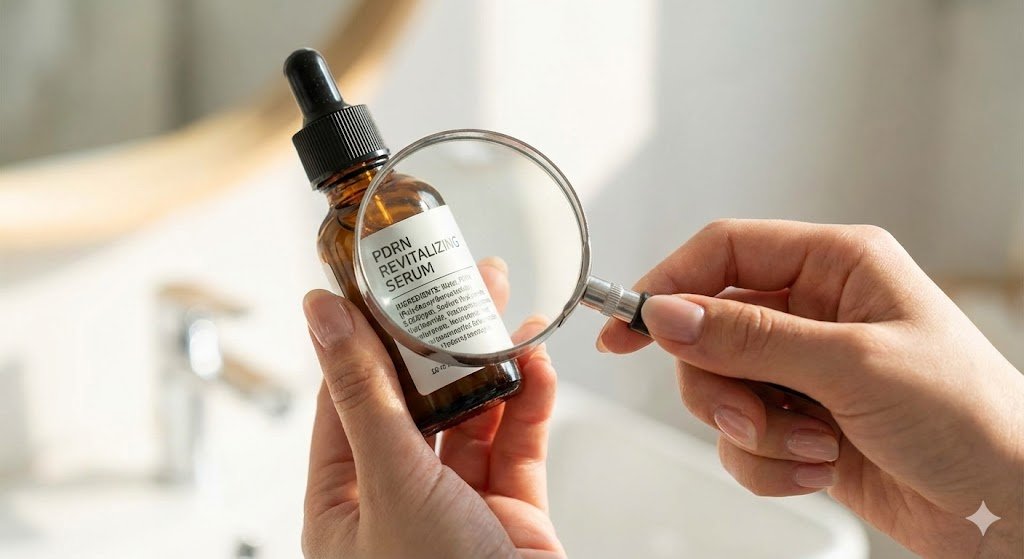
When evaluating a PDRN skincare product, here are the key factors to assess:
Concentration
Clinically used PDRN products typically fall in the range of 0.5%–1.0% PDRN (5,000–10,000 ppm). Products that don't disclose concentration at all are a red flag.
Molecular Weight
Lower molecular weight PDRN (closer to the 50–250 kDa range) penetrates better topically. Some products specify "low-MW PDRN" or "hydrolyzed PDRN". These are preferable for topical efficacy.
Formulation Companions
The best PDRN products are formulated alongside ingredients that either enhance penetration or work synergistically:
Brand Transparency
Look for brands that reference clinical studies, disclose sourcing, and don't make excessive medical claims for topical products.
Manufacturing Quality
Given PDRN's temperature sensitivity, products from brands with transparent cold-chain manufacturing practices or pharmaceutical-grade production are worth the premium.
Delivery Technology
Products using encapsulation technologies (liposomes, nano-capsules) may offer meaningfully better skin penetration than simple aqueous serums.
Salmon DNA (PDRN) skincare is one of the most scientifically credible trends to emerge in recent years. Unlike many ingredients that arrive with marketing hype and little research behind them, PDRN has over four decades of clinical use, a well-understood mechanism of action, and a growing body of peer-reviewed evidence.
The key things to keep in mind:
The mechanism is real. PDRN's A2A receptor pathway, its stimulation of collagen-producing fibroblasts, its VEGF-driven angiogenesis, and its anti-inflammatory modulation are all documented in peer-reviewed literature. This is not a made-up ingredient.
The evidence is strongest for injectables. The most dramatic, clinically validated results come from professional injectable treatments. Topical products work through the same pathways but with limitations imposed by skin penetration.
Topical PDRN is still meaningfully effective. For hydration, soothing, barrier repair, and as part of a longer-term anti-aging routine, well-formulated topical PDRN serums and creams offer genuine benefits. It is important to appropriately manage expectations compared to clinical treatments.
Consistency is key. Most meaningful improvements in firmness, elasticity, and texture appear after six to eight weeks of consistent use. This is not an overnight transformation ingredient.
It plays well with others. PDRN's gentle profile makes it one of the most stackable actives in skincare. It works alongside and enhances retinol, peptides, hyaluronic acid, and niacinamide.
Whether you're newly curious after seeing the trend on social media or seriously researching your next skincare investment, PDRN earns its scientific credibility. The question isn't whether it works. The more useful question is which format, concentration, and formulation is right for your skin goals.
Ready to explore the best PDRN products currently available? Head over to our Best Of page for clinical-grade comparisons across every price point. Or if you want personalized help finding your match, try our Serum Matchmaker tool.
References & Further Reading